Stefan Füsers

Founder of Impact Up. More than 15 years of experience in shaping and accompanying projects in peace work and in numerous social movements and organisations: Cambodia, Kosovo and Hamburg.

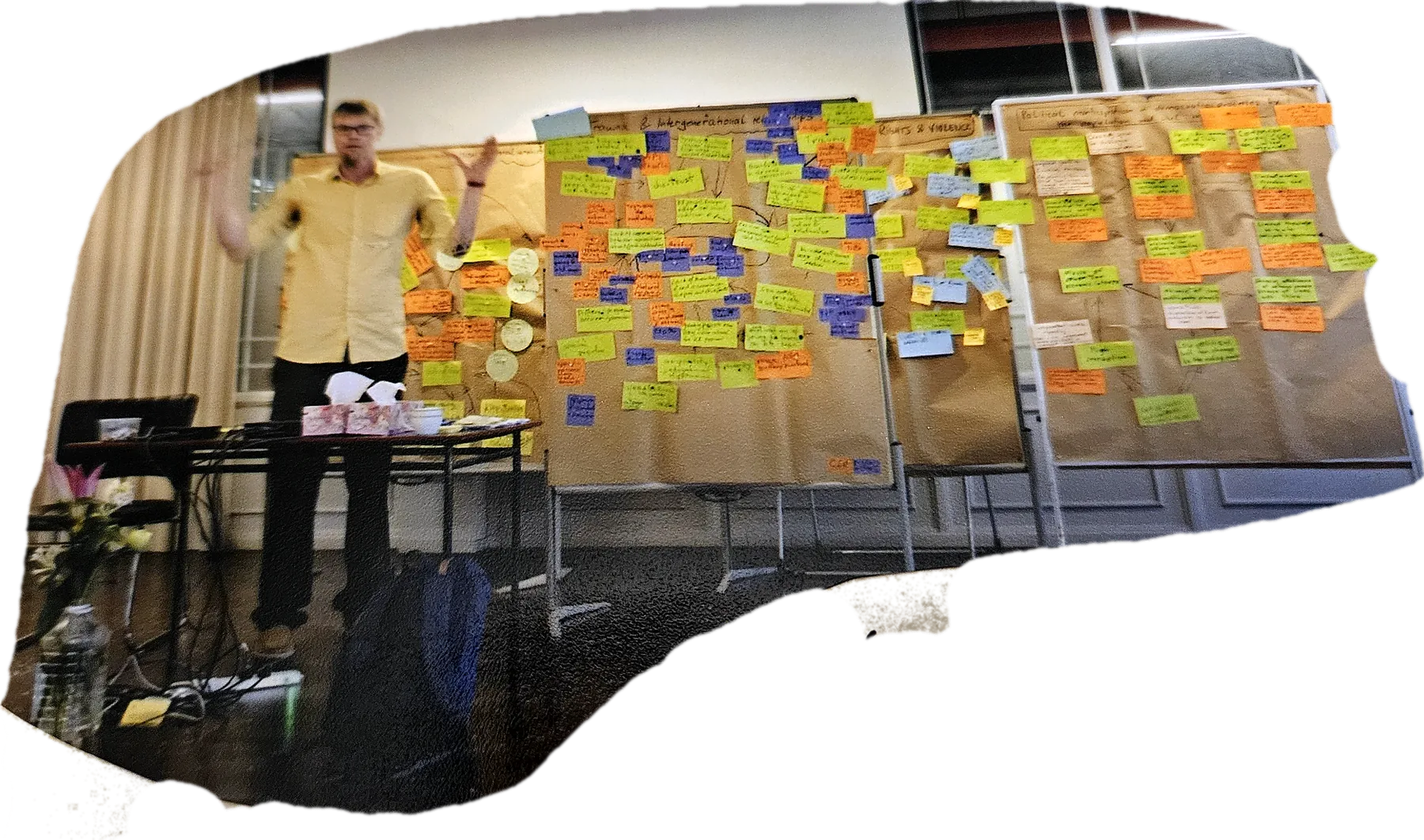
Portrait of Stefan Füsers

Stefan founded Impact Up, the institute for systemic impact orientation, in 2026. Until 2025 he spent six years as an adviser for planning, monitoring and evaluation (PME) in the Civil Peace Service (CPS) of GIZ (Deutsche Gesellschaft für Internationale Zusammenarbeit) in Cambodia. There he gathered practical experience in impact orientation with a CPS programme, with international experts and eight very diverse partner organisations. In peace and dealing-with-the-past work, project impact was always part of a programme impact of the CPS and at the same time part of the impact of the partner organisations – an international tribunal, psychological service providers, memorial sites, youth movements, universities. Capacity development was often a core element, and project impact not seldom organisational development as well. Here he learned how complexity in systems can be met with appreciation – and how that keeps options for action open.

The whole CPS programme was connected with the other CPS programmes in Cambodia, so that impact on the country as a whole was equally intended; and not least there were many further PME advisers in the CPS of GIZ in other countries, who regularly reflected on methods, structure and ways of working. In this way Stefan brought numerous actors in the field in Cambodia into resonance with one another and strengthened a network of people active for peaceful coexistence. Methods from peace work itself, from conflict transformation for instance, came into such planning and reflection workshops again and again, as did his experience as a yoga teacher and from Nonviolent Communication.

Since returning to Germany, Stefan has been working intensively on theories and methods for how participation and co-creation can genuinely be realised, on systemic approaches and a systemic stance. Numerous authors offer a space to reflect on the material he brought back from his time in Cambodia. Since December 2025 he has been deepening this in the training as a systemic organisational developer at WISPO. Literature on Systems Change and on co-creation has created a lot of resonance. With Impact Up he now takes the methods for planning, monitoring and reflecting together with the methods of peace work – dialogue, conflict transformation, dealing with the past and with trauma – into systemic practice, and develops approaches for systemic impact orientation aimed at changing society. Context-specific, with the empathy and the sense of what it takes to truly hear, see and feel what is at stake.

Thematically, Stefan brings a broad background from his time before the peace work in Kosovo and Cambodia – from economics and international studies at university. Many years of change work with social-ecological movements, above all for a basic income and degrowth, have shaped him as well. For the Climate Service Center in Hamburg he produced a literature review on the evaluation of the co-creation of knowledge – quality criteria, indicators and methods for it, compiled from around a hundred inter- and transdisciplinary research papers. Above all the idea that the participation of different perspectives matters in every phase of a collaboration is something Stefan has carried forward ever since. The work fed into the 2017 publication Evaluating co-creation of knowledge: from quality criteria and indicators to methods. And in nearly every role he has initiated and organised events again and again – from small festivals through extensive trainings to large conferences.

Systemic Organisational Development

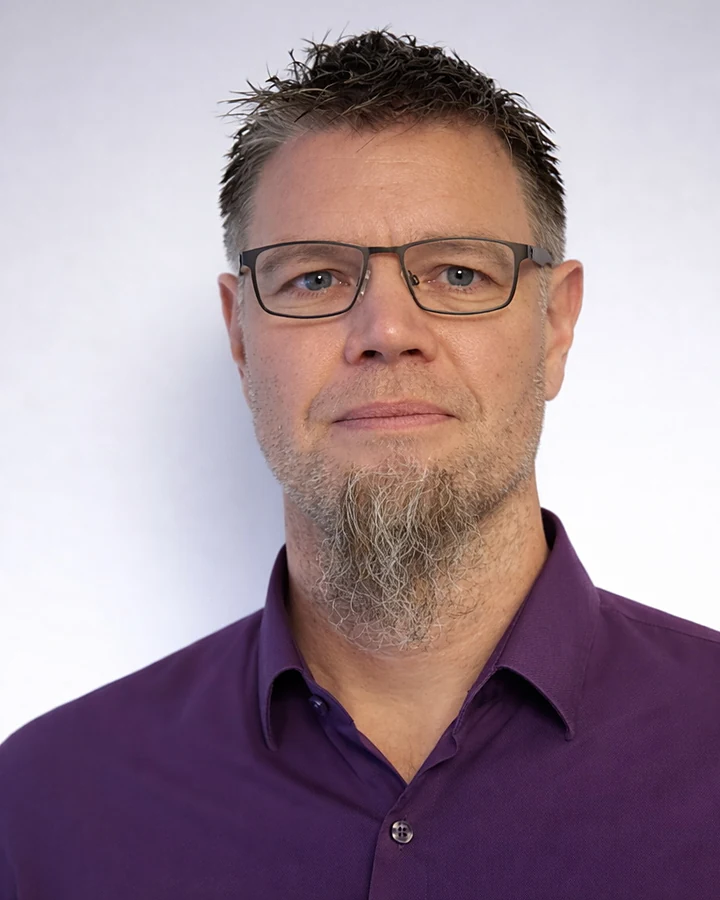
Stefan Füsers facilitating a workshop in front of three large card walls on trauma, rights and political participation
Impact planning in the Civil Peace Service, Cambodia

The training in systemic organisational development at WISPO is exciting for Stefan above all because systemic methods make it possible to offer support more broadly. The methods and the stance make it possible to genuinely support people even without deep contextual knowledge. Together with his consulting experience, Stefan now wants to put this knowledge to work for good ideas and projects – and go on making a meaningful difference in the world. For one or two exciting projects he is currently available free of charge, as the practical part of his training. The active network-building of these years, out of which much of Impact Up is emerging today (more on that under About Us), opens the way to it. As services of the institute, this begins with Project Coaching and Impact Consulting.

Artificial Intelligence

The developments in artificial intelligence are fascinating and remarkably dynamic. Building Impact Up turned into many hours of iterative collaboration with AI. Within his self-employment, Stefan began testing and trying out the possibilities playfully, again and again; by now he uses many of them productively as well, to bring things into the world. Tools like the Session Builder – and perhaps bringing Impact Up itself into the world on his own within a few months – would have been unthinkable without support from AI.

The experience is manifold, and briefly summed up: AI can by now do nearly everything that can be done on a computer. The difficulty lies before and after the work: connecting the sense of purpose to the AI beforehand, and checking the results against your own standards afterwards.

What interests Stefan today is less what these systems can do than what they bind themselves to: the language of an organisation, its impact logic, its decision paths and its standards for what counts as good. What exactly happens inside them is not known even to the developers, which makes practice in working with AI a valuable resource. To that end Stefan keeps following the latest developments and the perspectives of people who work with them even more productively. More and more questions of ethics and responsibility arise in this context, including the question of which things we deliberately want to share only with people. Judgement and responsibility stay with the people. How you want AI in your processes, and how that can work, is something Stefan is glad to accompany: AI Integration.

Stations

  • since 2026Impact Up – Institute for Systemic Impact Orientation
  • since 2025Systemic organisational development, WISPO Hamburg – alongside work, with DGSF certification planned for 2027
  • 2019–2025Civil Peace Service Cambodia, GIZ – adviser for planning, monitoring and evaluation
  • 2016–2018Civil Peace Service Kosovo – seconded expert at ANP on inter-ethnic dialogue about the past
  • 2015–2016Climate Service Center Germany (GERICS), Hamburg – Research Consultancy: Evaluating co-creation of knowledge
  • ongoingVoluntary work in networks for basic income, nonviolence and shaping the future

Studies

  • M.A.International Studies
  • M.A.European Studies
  • B.A.International Business

"Mr. Füsers combined systemic process consulting, organizational development, and impact-oriented PME in a way that significantly enhanced the program's internal coherence and external relevance."

"His ability to bring together diverse actors, identify synergies, and facilitate constructive collaboration in a politically sensitive environment had a direct impact on the quality and sustainability of partner activities."

"Through partner-driven and joint learning processes, he promoted plural narratives, participatory approaches, and context-sensitive engagement in a field shaped by historical sensitivities and evolving political conditions."

GIZ, Civil Peace Service · Cambodia · Letter of Reference, 2019-2025

"His very good conceptual and theoretical thinking was consistently grounded in practice. The congruence between the content he taught on constructive nonviolent conflict transformation and his own actions attests to his high integrity and consistently led to very good results."

KURVE Wustrow, Civil Peace Service · Kosovo · Arbeitszeugnis, 2017-2018

Translated from German.

Stefan is open and glad to support you with your concern in these areas. For now you reach him simply through the institute, and first conversations are of course always free of charge to begin with.